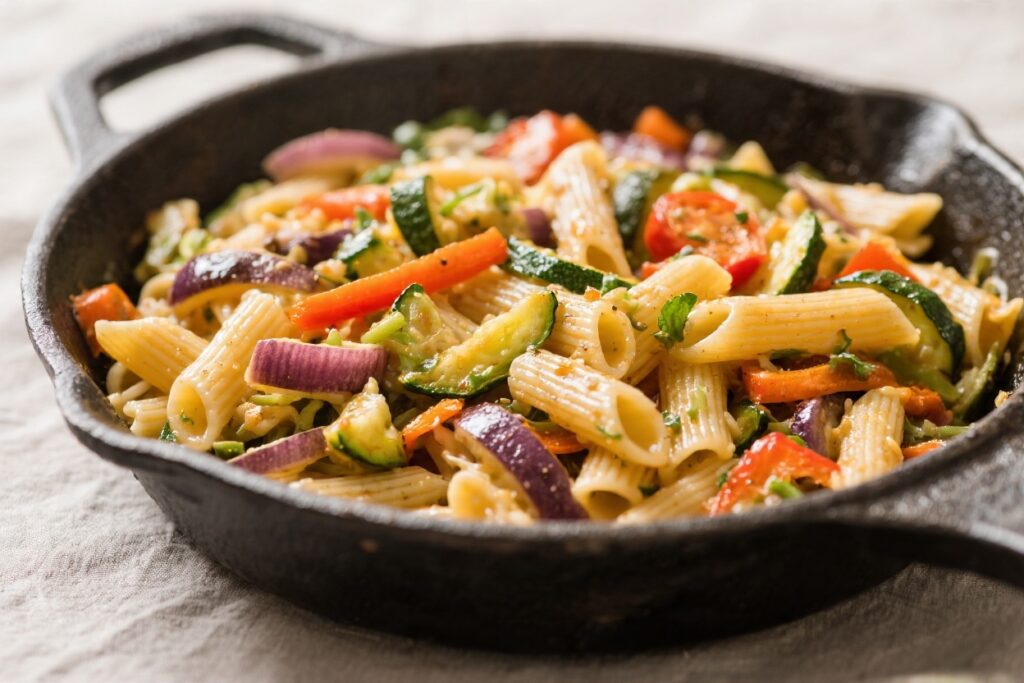
This is the kind of weeknight dinner you make when the farmers’ market is overflowing and you want something bright, cozy, and easy. Everything cooks together in one pan, so there’s no boiling separate pasta or juggling multiple pots. The pasta absorbs the flavors of sweet tomatoes, tender zucchini, and garlic as it simmers, making a silky, light sauce without any heavy cream.
It’s simple enough for a Tuesday but nice enough to serve on the patio with a glass of chilled white wine. Best of all, it’s built for two—no giant pot of leftovers to deal with.
Why This Recipe Works
This one-pan method lets the pasta release starch directly into the cooking liquid, which naturally thickens the sauce. That means you get a glossy, clingy finish without butter or cream.
Seasonal veggies like cherry tomatoes and zucchini cook quickly and stay bright, so the dish tastes fresh, not stewed. A touch of lemon and fresh basil at the end adds lift and balances the sweetness of summer produce. The result is a light, satisfying bowl that feels special with very little effort.
Keeping It Fresh
Freshness is everything here, so shop for firm zucchini and sweet, ripe cherry tomatoes.
If your tomatoes are lackluster, add an extra teaspoon of lemon juice or a pinch of sugar to balance the acidity. Cook the pasta until just al dente, because it will continue to soften slightly as it sits. If you’re serving later, reserve a splash of broth to re-loosen the sauce on the stove for 1–2 minutes right before eating.
Benefits of This Recipe
- One pan, minimal cleanup. You save time and dishes without sacrificing flavor.
- Balanced and light. Veggies bring fiber and color; Parmesan adds richness without heaviness.
- Quick. From start to finish in about 25 minutes, perfect for weeknights.
- Flexible. Works with different veggies, herbs, and pasta shapes you already have.
- Economical. Uses pantry staples and seasonal produce that’s often budget-friendly.
What Not to Do
- Don’t skip stirring. One-pan pasta needs frequent tossing so strands don’t clump and the sauce emulsifies.
- Don’t overcook the vegetables. Add zucchini and squash toward the end so they stay tender-crisp, not mushy.
- Don’t drown the pasta. Too much liquid dilutes flavor.
Start with the amounts listed and add only as needed.
- Don’t forget to season. Taste before serving. A pinch more salt, lemon, or pepper can make the flavors pop.
- Don’t add cheese over high heat. Pull the pan off the burner first to prevent clumping.
Variations You Can Try
- Herb swap. Use parsley, mint, or chives instead of basil, or mix them for extra freshness.
- Protein boost. Add a handful of cooked chickpeas in the last 3 minutes, or top with grilled shrimp or torn rotisserie chicken.
- Creamy twist. Stir in 2 tablespoons mascarpone, ricotta, or cream cheese at the end for a richer sauce.
- Extra veg. Toss in baby spinach or arugula in the final minute. They wilt fast and add color.
- Heat lovers. Use more red pepper flakes, or finish with chili crisp.
- Gluten-free. Use a gluten-free spaghetti and watch the liquid closely—some GF pastas need a touch more water.
- Dairy-free. Skip the Parmesan and finish with nutritional yeast and toasted pine nuts for savory depth.
One-Pan Summer Veggie Pasta for Two – Fresh, Fast, and Fuss-Free
Ingredients
- 6 ounces dry pasta (spaghetti, linguine, or thin fettuccine)
- 2 tablespoons extra-virgin olive oil
- 2 cups cherry or grape tomatoes, halved
- 1 small zucchini, halved lengthwise and thinly sliced
- 1 small yellow squash, halved lengthwise and thinly sliced (optional, or use more zucchini)
- 3 cloves garlic, thinly sliced
- 1/2 small red onion or shallot, thinly sliced
- 1 1/2 cups vegetable broth (low-sodium preferred)
- 1/2 cup water (plus more as needed)
- 1/2 teaspoon kosher salt, more to taste
- 1/4 teaspoon red pepper flakes (optional, for heat)
- Zest of 1/2 lemon and 2 teaspoons fresh lemon juice
- 1/3 cup grated Parmesan (plus extra for serving; use a vegetarian hard cheese if needed)
- 1/4 cup fresh basil leaves, torn
- Freshly ground black pepper
Instructions
- Prep the produce. Halve the tomatoes, slice the zucchini and squash thin, and slice the garlic and onion.Keep everything bite-sized so it cooks evenly with the pasta.
- Warm the pan. In a large, deep skillet or sauté pan with a lid, heat the olive oil over medium heat. Add the onion and a pinch of salt. Cook 2–3 minutes until just softened, stirring occasionally.
- Sauté the aromatics. Add the garlic and red pepper flakes.Cook 30–45 seconds until fragrant. Don’t brown the garlic—just let it bloom in the oil.
- Build the base. Stir in the tomatoes and a pinch of salt. Cook 2 minutes until they start to release juices and look glossy.
- Add pasta and liquid. Lay the dry pasta in the pan, breaking strands in half if needed to fit.Pour in the vegetable broth and water. The liquid should just cover the pasta; add a splash more water if needed.
- Simmer and toss. Bring to a lively simmer, then reduce heat to medium-low. Cover and cook 4 minutes, lifting the lid to stir and separate the strands once or twice so nothing sticks.
- Add zucchini and squash. Stir in the sliced zucchini and squash.Continue to cook uncovered, stirring frequently, 4–6 more minutes until the pasta is al dente and the liquid has mostly absorbed into a silky sauce. Add small splashes of water if the pan gets dry before the pasta is done.
- Finish the sauce. When the pasta is just tender, remove from heat. Stir in the lemon zest, lemon juice, and Parmesan.Toss until the cheese melts and the sauce turns glossy. Season with more salt and plenty of black pepper to taste.
- Add herbs and serve. Fold in the torn basil. Divide between two bowls and top with extra Parmesan, a drizzle of olive oil, and more pepper if you like.
FAQ
Can I use a different pasta shape?
Yes.
Spaghetti, linguine, or thin fettuccine work best for even cooking. Short shapes like penne also work, but you may need a few extra minutes and a splash more water to reach al dente.
What if my sauce looks watery?
Keep simmering uncovered and stir frequently. The pasta’s starch will thicken the sauce as liquid reduces.
If it still looks thin once the pasta is done, take the pan off heat and let it sit for 1–2 minutes; it will tighten up.
Can I make it ahead?
This dish is best right after cooking. If you must make it ahead, undercook the pasta slightly, cool quickly, and reheat with a splash of broth over low heat. Add the basil and Parmesan just before serving.
How salty should the liquid be?
Start with the 1/2 teaspoon of kosher salt since the broth and Parmesan add salt too.
Taste at the end and adjust. It’s easier to add salt than to fix an overly salty sauce.
What pan should I use?
A wide, deep skillet (10 to 12 inches) with a lid is ideal. The surface area helps the liquid reduce evenly and gives the pasta room to move so it doesn’t clump.
Can I add wine?
Absolutely.
Replace 1/4 cup of the broth with dry white wine. Add it after the garlic and let it simmer 30 seconds before adding the tomatoes and remaining liquid.
What if my tomatoes aren’t very sweet?
Add a pinch of sugar or an extra teaspoon of lemon juice to balance the acidity. A drizzle of good olive oil at the end also rounds out the flavor.
Is this recipe vegetarian?
Yes, as written it’s vegetarian.
To make it vegan, use vegetable broth, skip the Parmesan, and finish with nutritional yeast, lemon zest, and toasted nuts for richness.
Final Thoughts
One-Pan Summer Veggie Pasta for Two is bright, unfussy, and full of flavor. It makes the most of seasonal produce without a long ingredient list or a sink full of dishes. Keep this method in your back pocket and swap in whatever vegetables you have on hand.
With a squeeze of lemon, a handful of basil, and a sprinkle of Parmesan, dinner feels both simple and special—exactly what summer cooking should be.